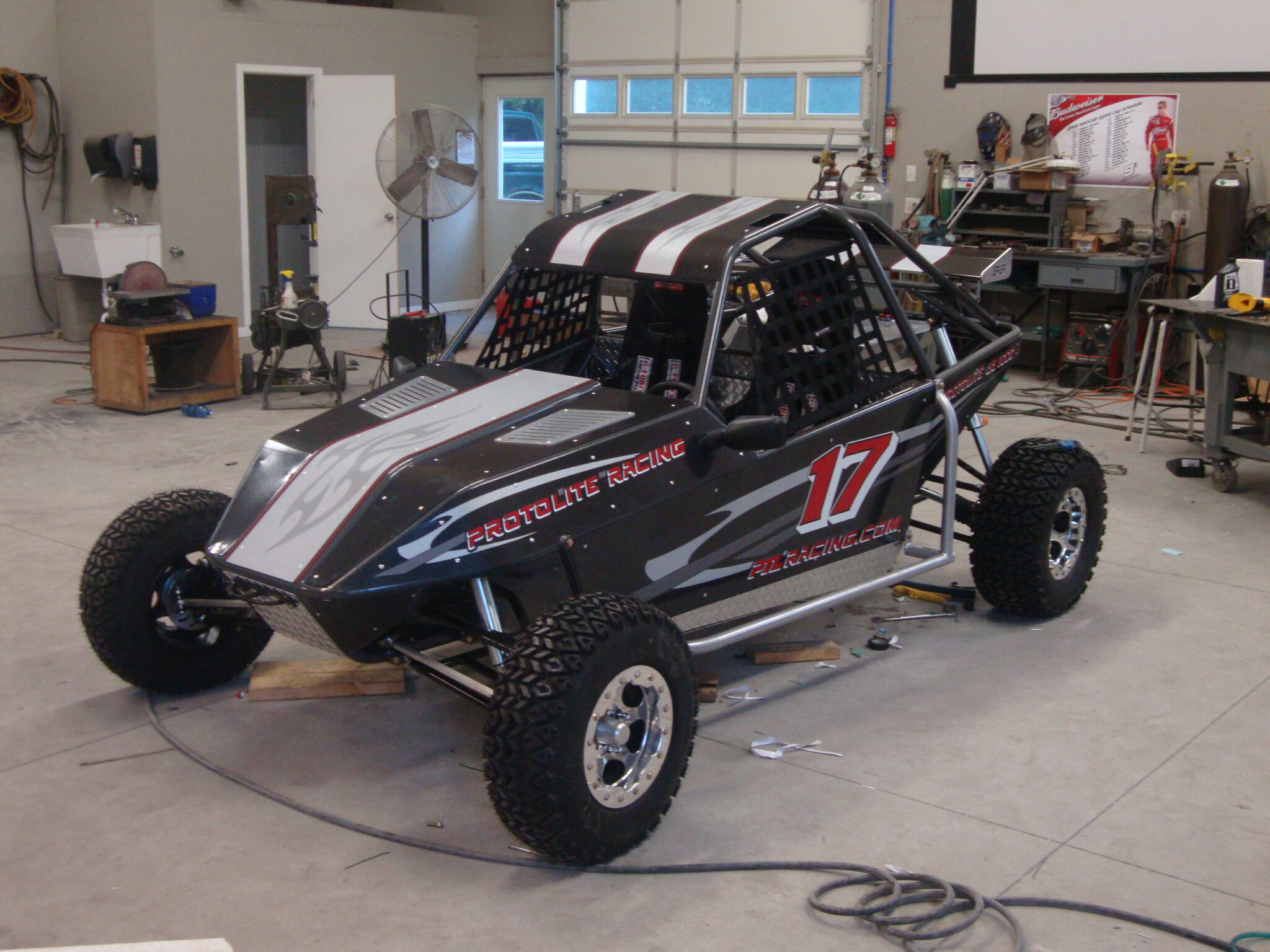
The dune buggy has been around for more than 60 years. It remains one of the most compelling things you can build in a garage. Lightweight, open, fast over loose terrain, and genuinely fun to drive, these machines have earned a permanent place in off-road culture. The category covers more ground than most people realize, from a budget VW-based weekend toy to a purpose-built sand car with a high-horsepower motorcycle engine.
This article covers what a dune buggy is, the different types and price tiers, and what the build involves.
What is a dune buggy?
A dune buggy is a lightweight, open-cab off-road vehicle built for sand dunes, desert terrain, and loose surface driving. The original design came from Meyers Manx in 1964, built by Bruce Meyers on a shortened Volkswagen Beetle pan with a fiberglass body. That combination, a rear-mounted air-cooled VW engine over the drive wheels, low weight, and open construction, defined the template that the whole category still follows.
Modern builds have expanded well beyond the VW pan. Tube-frame chassis designs now dominate the home-build market, and engine options range from small displacement single-cylinders to sport motorcycle engines making well over 100 horsepower. The core characteristics remain the same: rear-wheel drive, open construction, long-travel suspension, and a power-to-weight ratio that makes them genuinely quick over rough ground.
Types of dune buggies
VW pan builds
The classic approach. You start with a Volkswagen Beetle floorpan, shorten it, and build or buy a fiberglass body to fit over it. The air-cooled flat-four engine sits in the rear, the transmission is proven and well-understood, and the parts ecosystem is enormous. A good running VW pan can be found for $500-$2,000, and the fiberglass bodies to fit them are still in production from multiple manufacturers.
These are the most accessible entry point into the hobby. Slow by modern standards? Sure. Simple, reliable, and deeply connected to the history of the sport? Absolutely. For sand dunes and casual desert riding, a VW pan buggy delivers exactly what the design intended.
Tube frame builds
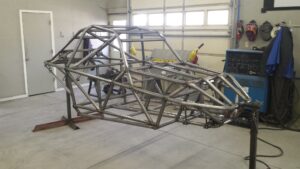
Tube frame dune buggies use a welded steel chassis instead of a modified VW pan. This approach gives you full control over the geometry, suspension travel, and layout. You design around whatever engine you want to run, set the weight distribution where you need it, and build in the safety structure your intended use requires.
The tube work on a dune buggy chassis is demanding. It involves compound bends, tight node clusters, and enough intersections that your notching technique matters. The skill set is the same as roll cage and crosskart work: a capable rotary draw tube bender, a quality notcher, and enough practice to make clean fits. Plans from reputable designers take a lot of the guesswork out of geometry and tube sizing.
Sand rails
Sand rails are the purpose-built performance end of the dune buggy spectrum. Lighter and more spartan than a typical buggy, sand rails prioritize dune speed over all-around utility. Sand rails often run motorcycle or sport car engines, use custom suspension geometry, and are built entirely around going fast in loose sand. These are not beginner builds and not budget builds. They are, however, the machines you see cresting dunes at speed in the videos that pull people into the category in the first place.
High-end sand cars
At the top of the market, purpose-built sand cars from manufacturers like Tatum and Funco represent a completely different level of engineering and cost. These are professional-grade machines with billet components, custom long-travel suspension, and engines producing several hundred horsepower. Prices start around $80,000 and go well above $200,000 for fully built examples. They share the same basic concept as a VW pan buggy but almost nothing else.
Building a dune buggy from plans
Why plans matter
Building from plans is the standard approach for home builders. A good set of plans gives you proven geometry, tube sizing, and suspension pickup points. The build sequence also accounts for order-of-operations problems that first-time builders commonly run into. Without plans, you are solving geometry and structural engineering problems from scratch, which is a much longer and more expensive path to a finished vehicle.
Protolite Racing
Protolite Racing out of Minnesota has been producing dune buggy plans and parts for nearly 20 years. Their SS1000 and DXT single-seat designs are well-documented, actively supported, and have a long track record of completed home builds. Casey Oswald at Protolite offers plans and select components. His designs have a reputation for being completable by a motivated home fabricator without a professional shop. If you are looking for a starting point for a tube frame buggy, their plans are worth a look: ptlracing.com.
Safety structure
An open-cab vehicle with no roof and no doors needs a well-designed rollover protective structure. On a dune buggy, that means a cage built to absorb and redirect impact energy away from the occupants. Good designs include a main hoop, front hoop, diagonal bracing, and harness mounting points integrated into the structure. Window netting, five-point harnesses, and shoulder barriers are common additions that meaningfully improve occupant protection in a rollover.
This is not an area to cut corners. The cage is the last line of defense if something goes wrong on a dune or on the trail.
What does a dune buggy build cost?
A tube frame dune buggy build from plans typically runs between $10,000 and $36,000. The range is wide because engine choice, suspension hardware, and parts sourcing all move the number significantly. That range is wide because the decisions you make on suspension components, engine, wheels, and safety equipment have a large effect on the final cost. A budget build using a modest engine and economical parts sourcing lands at the lower end. Stepping up to a motorcycle engine, quality suspension hardware, and proper safety equipment pushes toward the upper end.
Parts costs fluctuate with the market, so treat those numbers as a planning range rather than a firm quote. Getting a full parts list from your plans provider before you start is the most reliable way to build an accurate budget.
Is a dune buggy the right build for you?
If you have access to sand dunes, desert terrain, or open land, a dune buggy is one of the most rewarding things you can build. The category has decades of accumulated knowledge behind it, active online communities, and multiple plans providers with proven designs. You do not need a professional shop to finish one. Solid welding and tube bending skills, a realistic budget, and a clear picture of what you want the machine to do are what matter.
Start with plans, not a blank sheet of steel. Choose your engine before you start the chassis so the layout works around it. And build the cage right the first time.