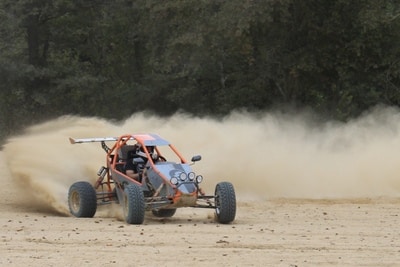
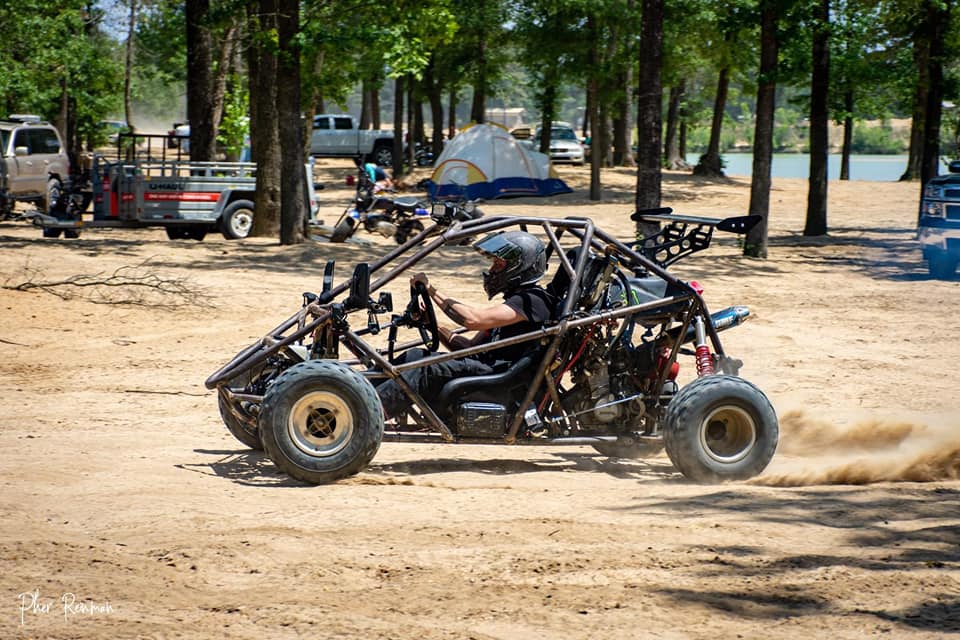
There is a category of off-road vehicle that costs less than a used ATV and fits in a single-car garage. A first-time fabricator can build one in a few weekends. It will out-corner, out-accelerate, and out-fun almost anything else you could put in a field. That vehicle is a crosskart, and if you have not heard of one yet, that is about to change.
What is a crosskart?
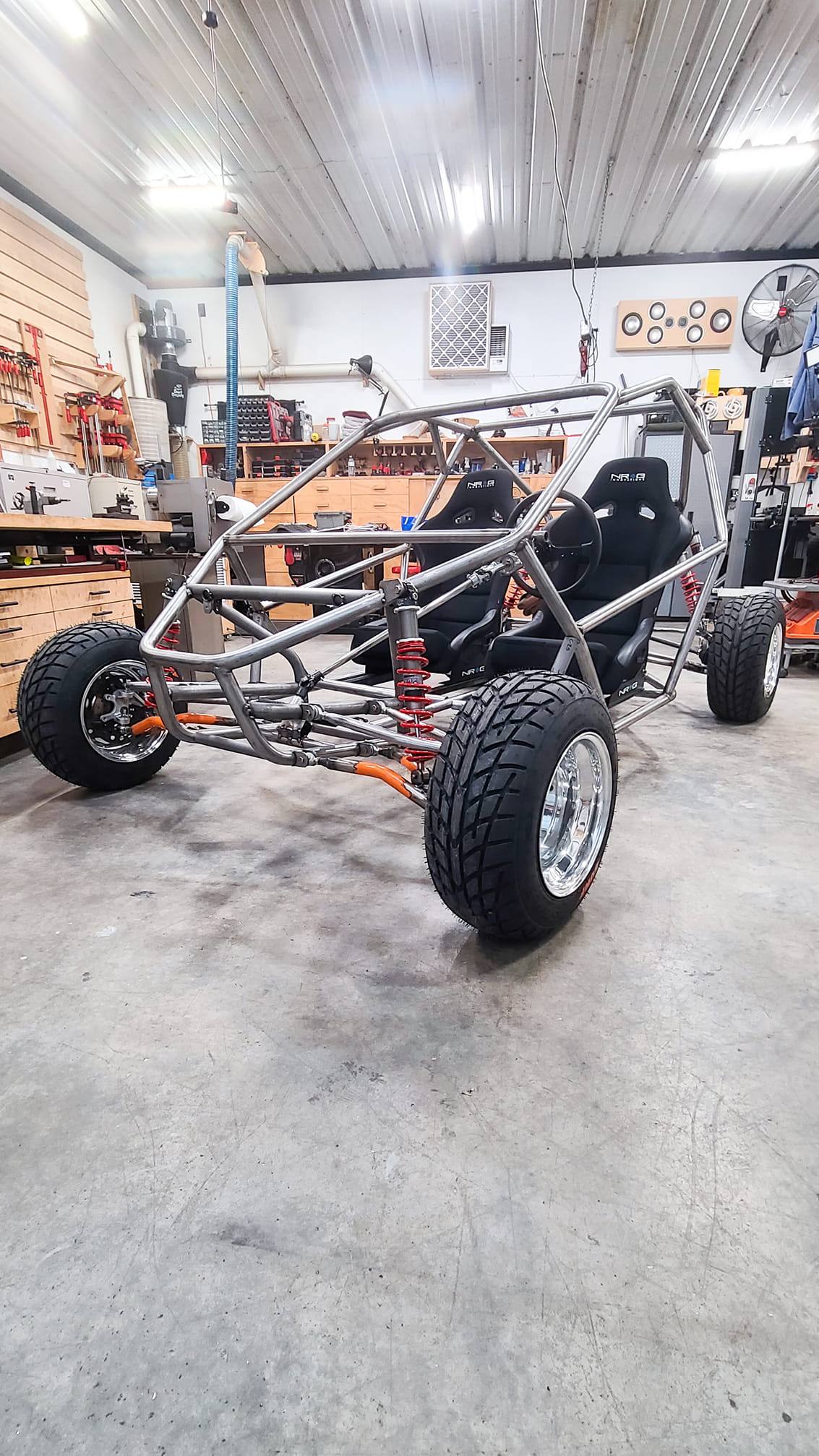
The crosskart originated in Sweden in the early 1980s, invented by Erland Andersson. Pulling from sprint cars, midget racers, and mini sprints, the design strips everything down to the essentials: a lightweight tube chassis, long-travel suspension, and a high-revving engine. The result is a machine that is fast, nimble, low-maintenance, and genuinely accessible to build at home.
Crosskarts compete on autocross, rallycross, dirt oval, and ice racing tracks. They are built for loose surfaces, slides, and opposite lock, not paved road courses. The sport is biggest in Scandinavia and northern Europe, where it has run under sanctioned competition for decades. In the USA, the community has been expanding fast, driven largely by DIY build culture and plans-based builders who share their work online.
Why build one?
The cost makes no sense compared to anything else
A crosskart build is well within reach of a home builder. For comparison, a new entry-level side-by-side will run $12,000 to $15,000 before you add any upgrades. A crosskart built from plans will beat that side-by-side in nearly every performance metric that matters on a dirt track, for a fraction of the price.
Even a fully built machine with quality suspension components, a motorcycle engine swap, and race-ready hardware stays well under what you would spend on a comparable turn-key vehicle. The cost-per-unit-of-fun calculation is not close.
First-time builders finish these
People with no prior fabrication experience complete crosskart frames in a weekend or two using plans. That is not marketing language. It is what the KJ Raycing community reports repeatedly, across hundreds of verified builds. The tube sizes are manageable and the design is well-documented. Plans come with cut lists, bend angles, and a build community you can ask questions in.
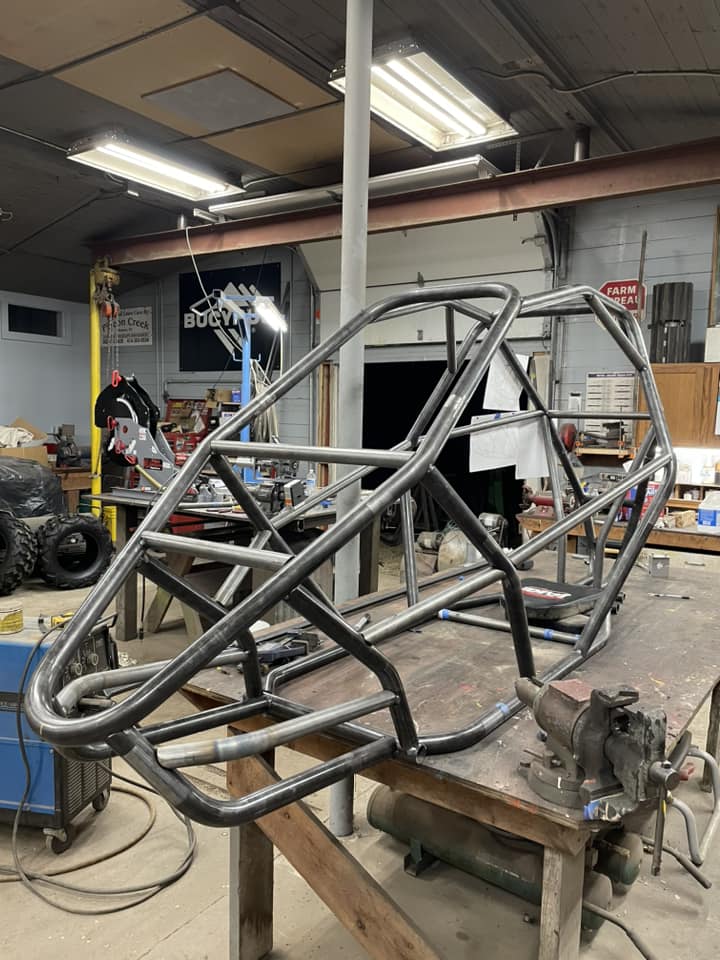
If you can weld and bend tube, you can build one of these. For those still learning, this is an excellent way to get your reps in on a project that actually goes somewhere when it is done.
It is a real family project
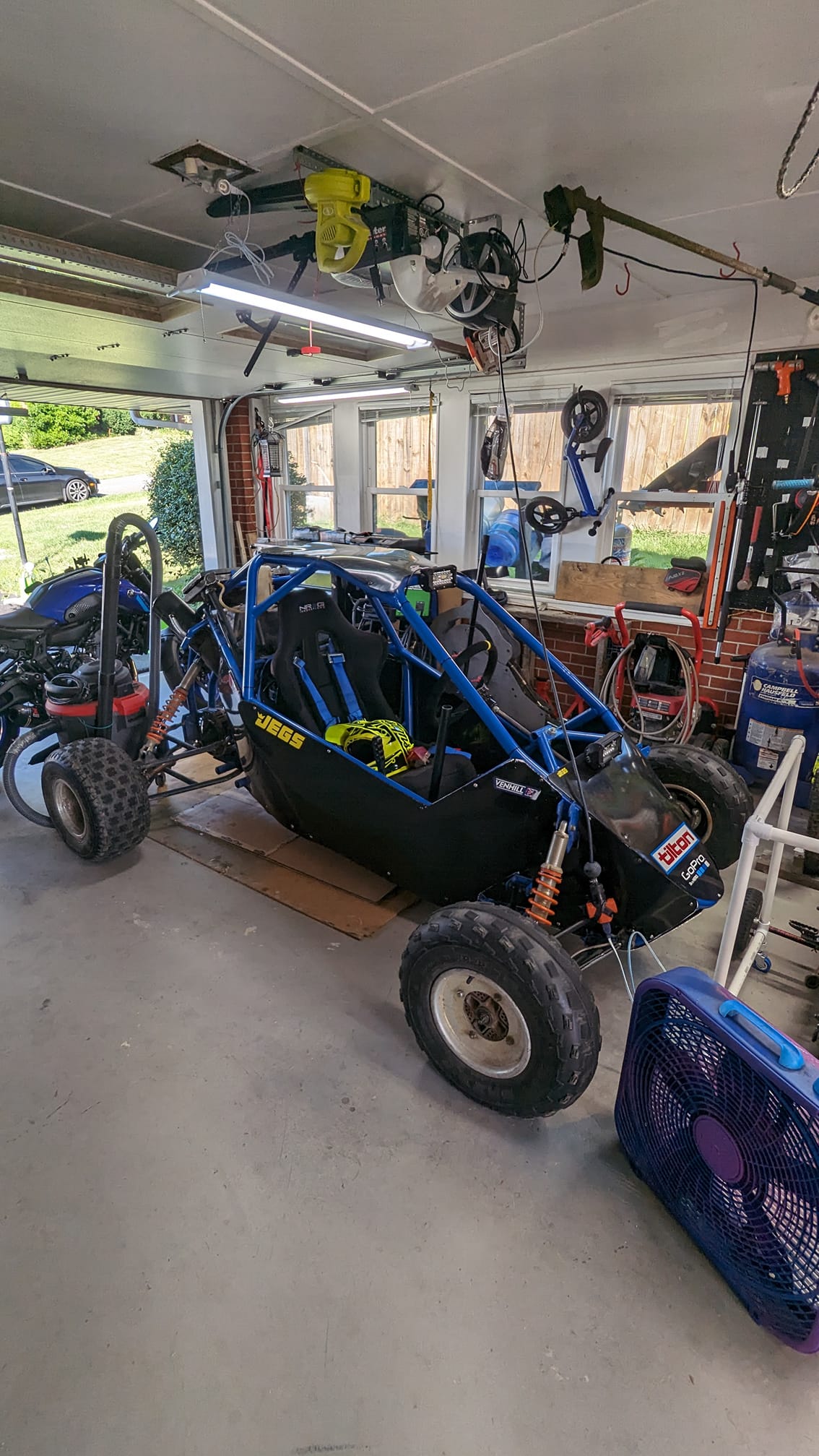
The VF-2 is a two-seat side-by-side crosskart. Drivers as young as 9 and as old as 85 have put seat time in these machines. You can build a single-seat VF-1 for yourself. Or build the VF-2 and share it with your kids, your spouse, or whoever else you want in the seat next to you. Either way, the build itself is a shared project, and the driving is better.
KJ Raycing and the builder community
KJ Raycing is a veteran-owned small business run by an active military aviator with 26-plus years of service. He designs the plans, runs an active YouTube build series, and manages a community of thousands of verified plan holders. At 84K Instagram followers and growing, the community is the most active crosskart builder network in the USA.
KJ’s plans follow FIA technical specifications, which means builds from his plans meet the baseline structural requirements for sanctioned competition. The VF-1 is a single-seat machine. Its sibling, the VF-2, is a two-seat side-by-side. Both are well-documented and actively supported by a community of builders who have already solved the problems you are going to run into.
RogueFab and KJ Raycing have an informal but genuine relationship. KJ recommends RogueFab benders to his builders, and we configure builder packages around the tube sizes and die sets his plans call for. Neither party pays the other. The recommendation goes both ways because it makes sense for the builders, not because of any commercial arrangement. If you are buying plans, go to kjraycing.com.
Building the frame
What the tube work actually looks like
A crosskart frame is a serious tube bending and notching project. It is not a beginner project in the sense that you can skip learning the tools. Motivated first-time builders who take the time to set up correctly finish these regularly. The frame involves multiple compound bends, tight notch fits at tube intersections, and enough nodes that your notching technique matters.
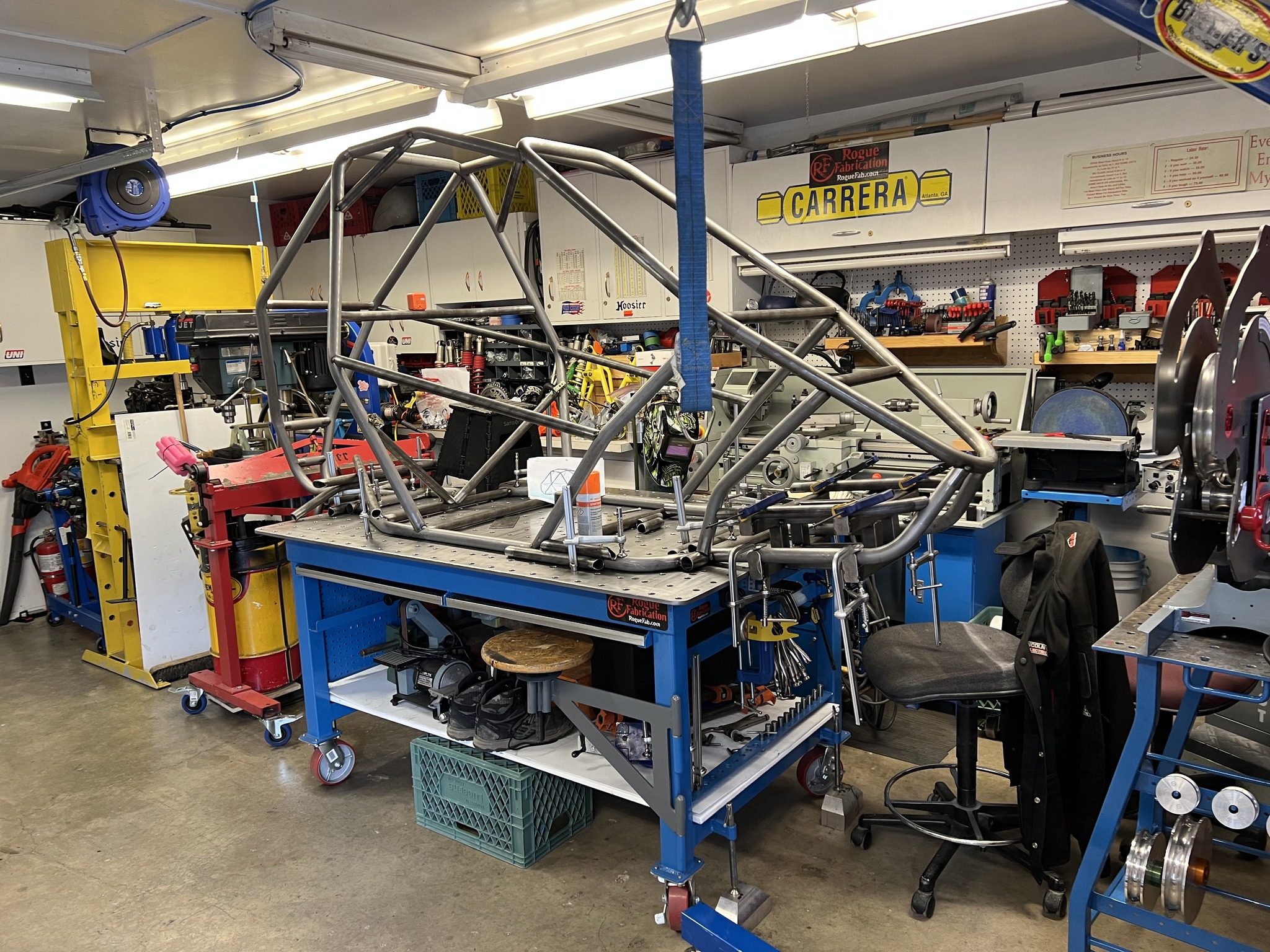
Professional builders use the same process as home builders: bend the tube, notch the intersections, tack it up on a flat table, and weld it out. The difference between a shop build and a garage build is mostly speed, not quality. A careful home builder working from good plans produces a frame that is structurally equivalent to what comes out of a professional shop.
One important note on tube wall thickness
KJ’s plans specify 1.5″ x .083″ wall tubing for many chassis members. That wall thickness will not bend cleanly on the 1.5″ x 4.5″ CLR die set without a mandrel attachment. If you try it without a mandrel, you will get wrinkling on the inside of the bend and deformation that compromises the tube. Use at least .105″ wall for acceptable bend quality on that die set. This is a slight deviation from the plans, but it produces better bend quality and still follows the design intent. Your frame will be stronger for it, not weaker.
The RogueFab builder packages
We offer three builder packages configured specifically for crosskart builds: Base, Shop, and Pro. Each package includes every die needed for both the VF-1 and VF-2 chassis. If you are undecided between the two designs, start with the VF-1 package. It covers every die used in both builds, so you are not locking yourself out of the VF-2 by starting there.
These packages are built around the M6xx bender, which is what KJ uses and what his community runs. The die ecosystem carries forward if you upgrade the frame later, so the tooling investment you make for a crosskart build stays useful for every project after it.
Racing and competition
In the USA, crosskarts compete under rallycross organizations including SCCA RallyCross and regional rallycross series, as well as autocross X class events. KJ Raycing’s plans follow FIA technical specifications, giving you a solid starting point for most sanctioned classes. Every sanctioning body has its own class rules. Check with your local organization before committing to a specific build spec for competition.
The sport is growing. New sanctioned events keep appearing around the world as interest in affordable, accessible motorsport grows. Getting in now, while the community is still relatively small in the USA, means you are building relationships and track time before the field gets crowded.
Is a crosskart the right build for you?
If you want a project that teaches you real fabrication skills, produces something you can drive hard when it is done, fits a reasonable budget, and connects you with a community of builders who have already figured out the hard parts, yes. A crosskart is the right build.
The builds that stall out almost always started without plans, without the right tooling, or without a clear picture of what the finished machine should be. Start with KJ’s plans. Set up your bender correctly for the tube sizes his plans call for. Build the VF-1 if you are solo, the VF-2 if you want a passenger. Then go make some noise in the dirt.