Square tube is everywhere. Gates, fence panels, trailer frames, shop furniture, bumpers, light bar mounts, architectural railings — if you’re fabricating in steel or aluminum, square tube bending comes up constantly. The market is large and the applications are practical. It’s not exotic work. It’s bread and butter.
It’s also genuinely harder to bend cleanly than round tube, and the reasons why are worth understanding before you start burning material.
A note before we go further: square tube is never pipe. These are completely different products with different wall tolerances, different material grades, and different behavior in a bender. If you’re not sure about the distinction, read (scroll nearly to the bottom) our Bender Tech article before you order tooling.
Two Terms Worth Knowing
CLR (Center Line Radius) is the radius of a bend measured to the centerline of the tube. A 6″ CLR on 1.5″ square tube means the center of the tube follows a 6″ radius arc. Tighter CLR means a tighter, more aggressive bend. Most of our die sizes are labeled by CLR.
D ratio is the CLR divided by the tube’s outside dimension. A 1.5″ square tube on a 6″ CLR die has a D ratio of 4 (6 divided by 1.5). Higher D ratio means a gentler bend and better results. Lower D ratio means a tighter bend and more forming stress on the tube.
For round tube without a mandrel, a D ratio of 3 is a common starting point for moderate wall thicknesses. Square tube is less forgiving. A D ratio of 4 is where square tube really prefers to live. You can go tighter, but your wall thickness has to support it, and the results below show you where the limits are.
Steel vs Aluminum: Different Problems
Steel and aluminum square tube both bend on the M6xx, but they fail in different ways and you need to know the difference before you set up.
Steel square tube tends to cup on the flat faces of the bend. The material under compression on the inside of the bend doesn’t have anywhere to go, so the inner flat face pushes outward slightly. This is normal compression behavior, not a defect in your setup. The material is taking the path of least resistance. On most applications it’s cosmetically acceptable and structurally irrelevant. Push the wall ratio too far and it becomes wrinkles. We’ll show you where that line is.
Aluminum square tube has a different failure mode. Instead of cupping, aluminum tends to crack or rip on the outside of the bend when pushed past its limit. The outside face is in tension during the bend, and aluminum’s lower elongation means it can tear rather than stretch. This makes wall ratio and D ratio selection even more critical for aluminum than for steel.
Mohawk Dies: What They Are and When They Help
A mohawk die has a ridge running along the center of the groove that contacts the inner flat face of the tube during the bend. As the tube bends, the ridge pushes outward against the inner face, partially counteracting the natural compression cupping. This allows you to bend thinner wall tube on tighter CLRs than a standard die would allow on steel.
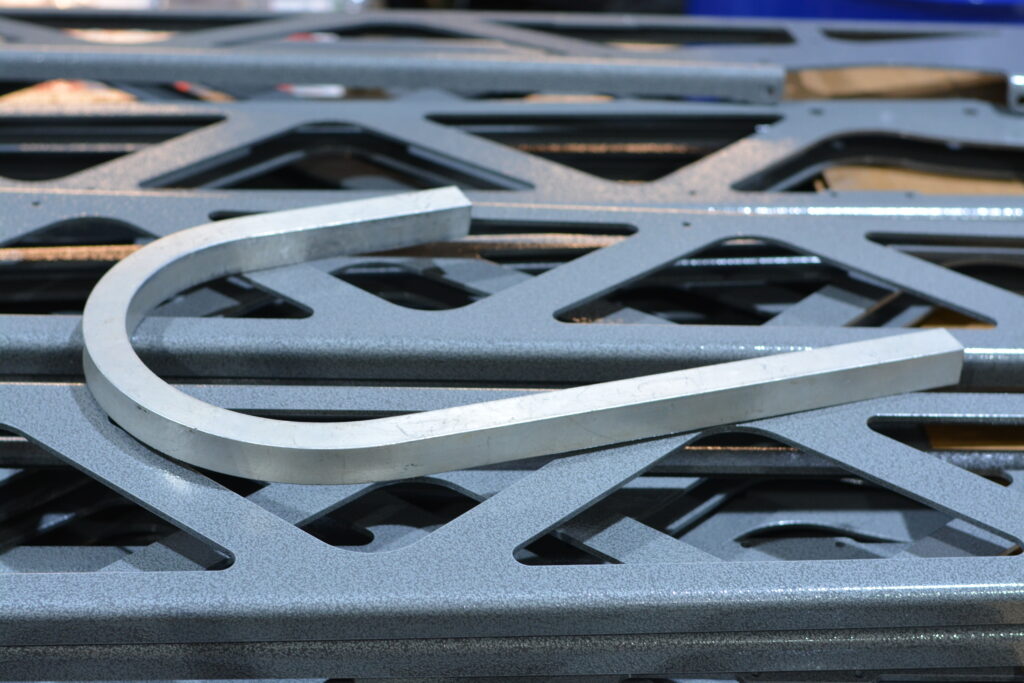
Mohawk dies are not a free upgrade. They wear faster than standard dies because the ridge contacts the tube on every bend and carries significant forming load. They may also reduce the number of degrees achievable in a single ram stroke depending on your setup. And they don’t provide the same benefit for aluminum that they do for steel. Aluminum’s tendency to crack on the outside of the bend is a tension problem on the outside face, not a compression problem on the inside face. A mohawk die addresses the wrong side of the tube for aluminum.
All of the bend photos on this page were made with standard dies, not mohawk dies. Our ongoing mohawk die testing shows we can go thinner on steel than the results below — but with the tradeoffs noted above factored in. More on that as testing continues.
The Bend Data
Here’s what we’ve actually bent, with photos at every data point. Clean results and failure cases both.
1.5″ Square Tube
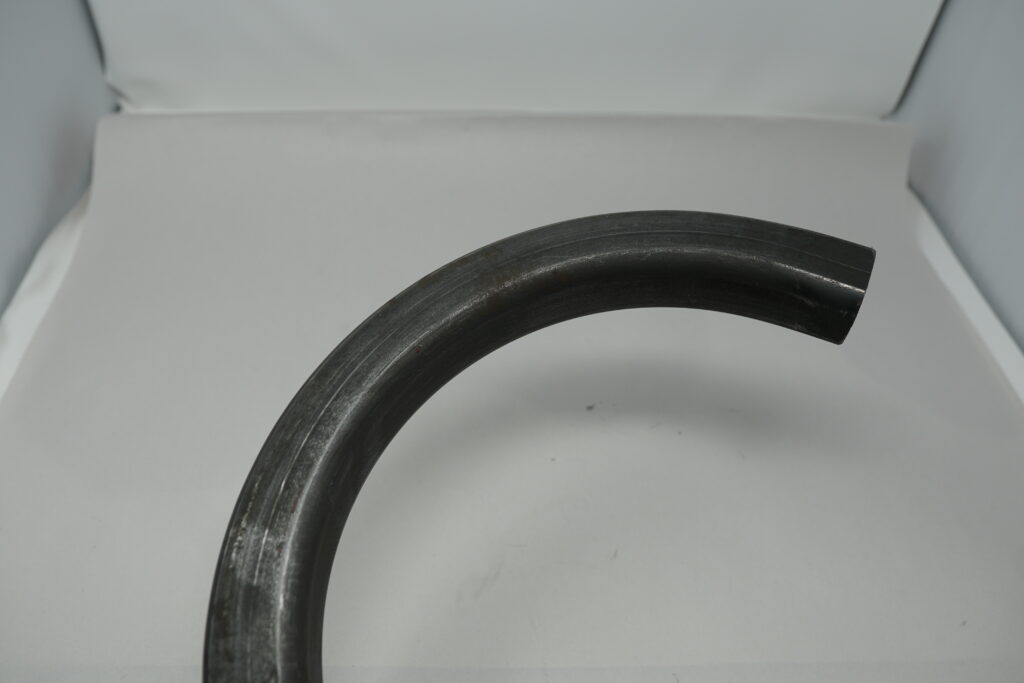
1.5″ x .188″ wall steel, 6″ CLR (4D): Clean result. Good wall ratio for this size and CLR combination. The inner face shows normal compression behavior.
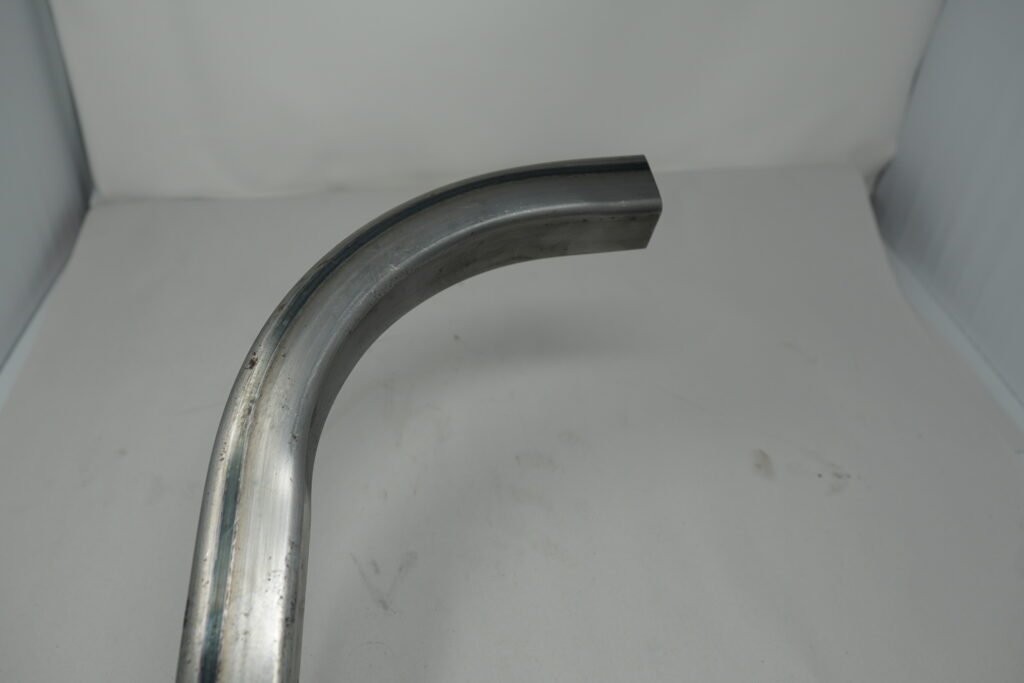
1.5″ x .115″ wall steel, 6″ CLR (4D): Clean result. Thinner wall than the .188, still works well at 4D.
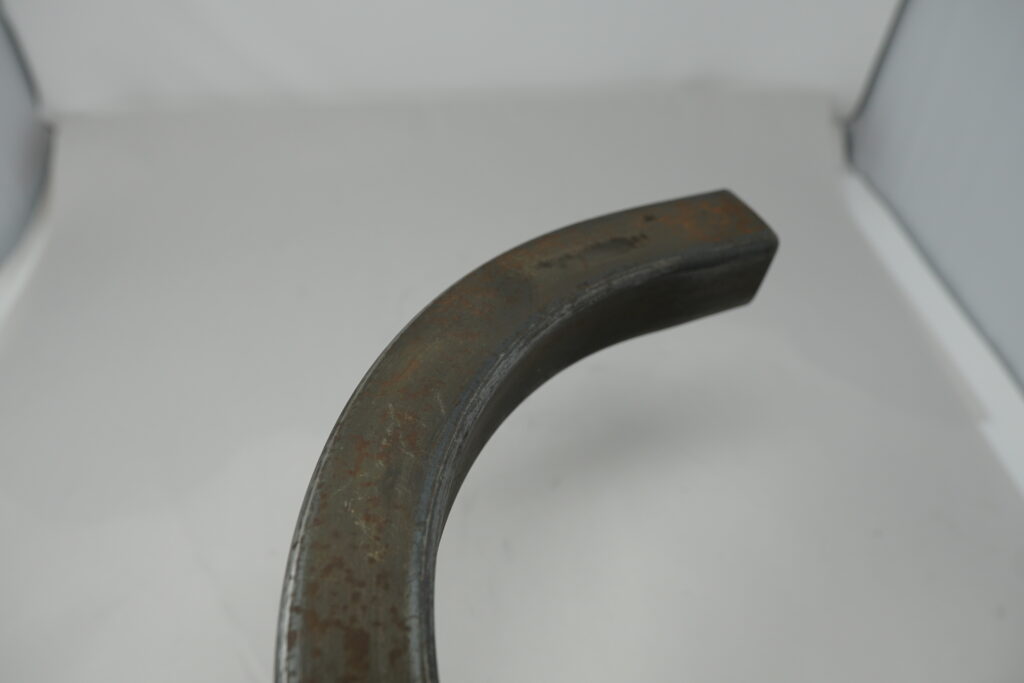
1.5″ x .105″ wall steel, 6″ CLR (4D): Clean result. The test specimen had surface rust from storage — the bend itself is fine. Getting toward the thinner end of what works cleanly at this CLR on standard dies.
1.25″ Square Tube
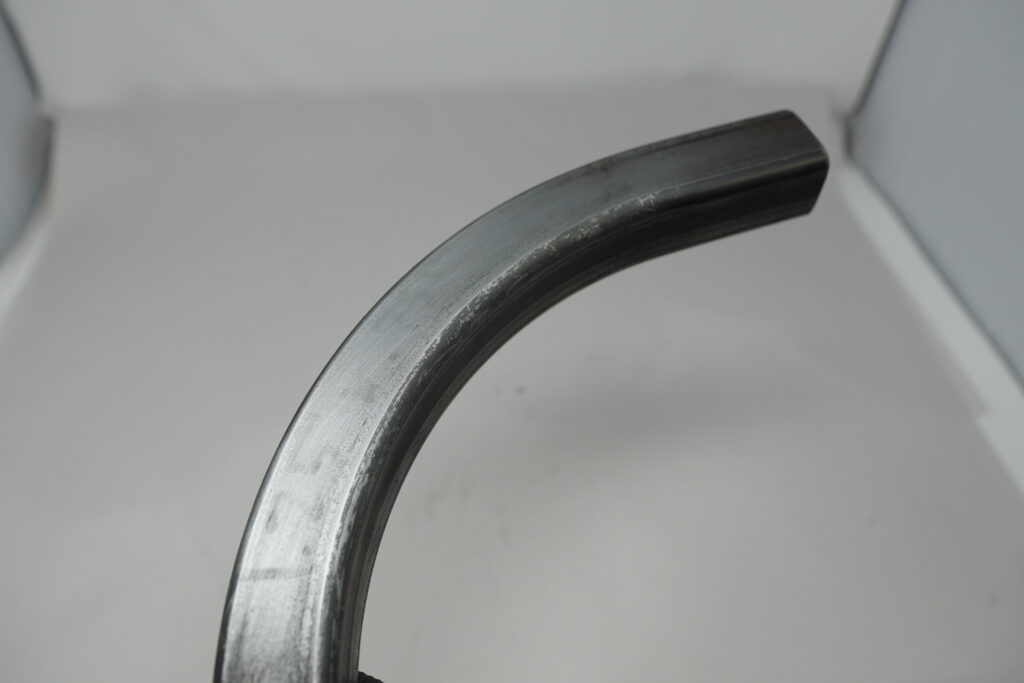
1.25″ x .120″ wall steel, 6″ CLR (4.8D): Clean result. Higher D ratio than 4D gives extra margin.
1.25″ x .110″ wall steel, 4.5″ CLR (3.6D): Clean result even at a tighter D ratio. Wall thickness is carrying the tighter bend well.
1.25″ x .083″ wall aluminum, 6″ CLR (4.8D): Clean result. Aluminum at a generous D ratio with adequate wall thickness. Outside face held well, no cracking.
1.25″ x .050″ wall steel, 6″ CLR (4.8D): Wrinkles. The wall is too thin to resist the compression on the inside of the bend at this CLR. This is the failure case. A mohawk die would help here on steel.
1″ Square Tube
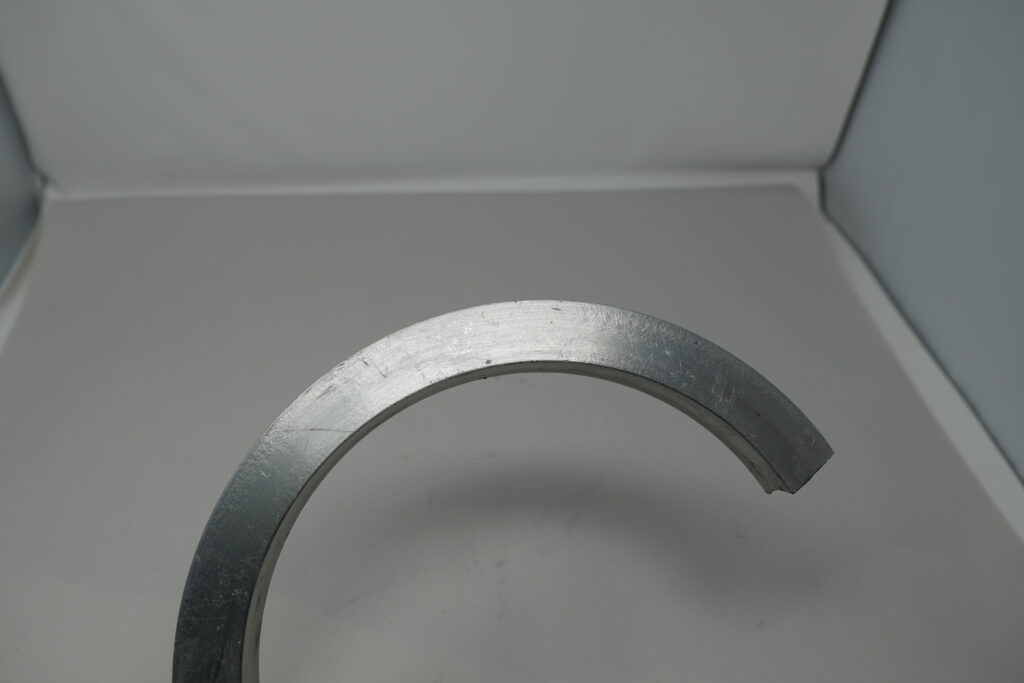
1″ x .125″ wall aluminum, 4.5″ CLR (4.5D): Clean result. Good wall ratio for aluminum at this CLR. Outside face held without cracking.
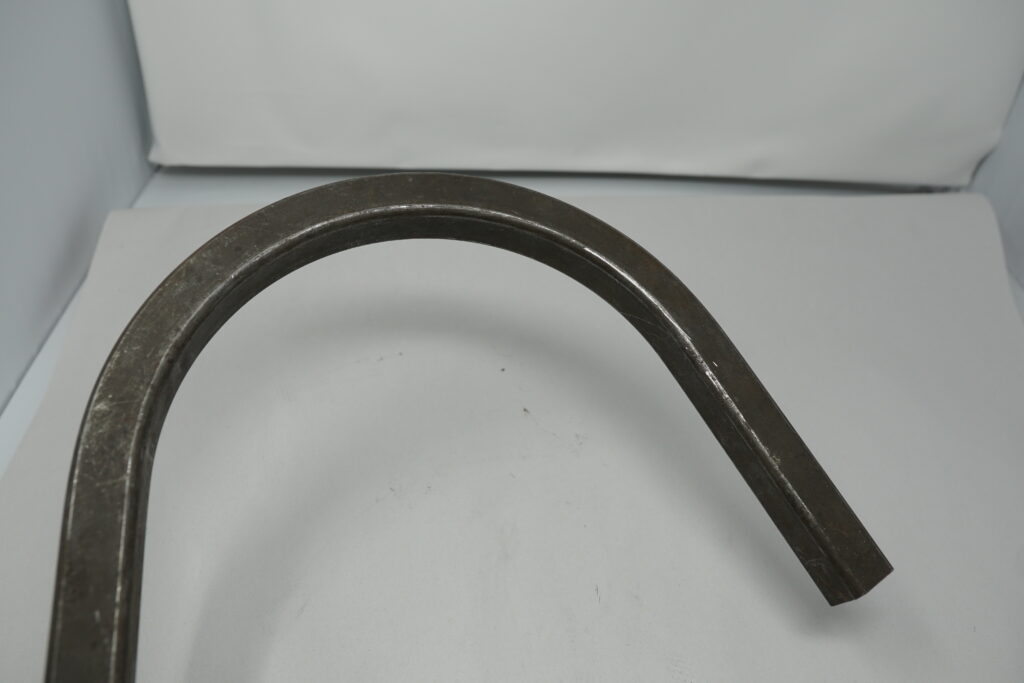
1″ x .115″ wall steel, 4.5″ CLR (4.5D): Clean result. Steel at 4.5D with adequate wall thickness.
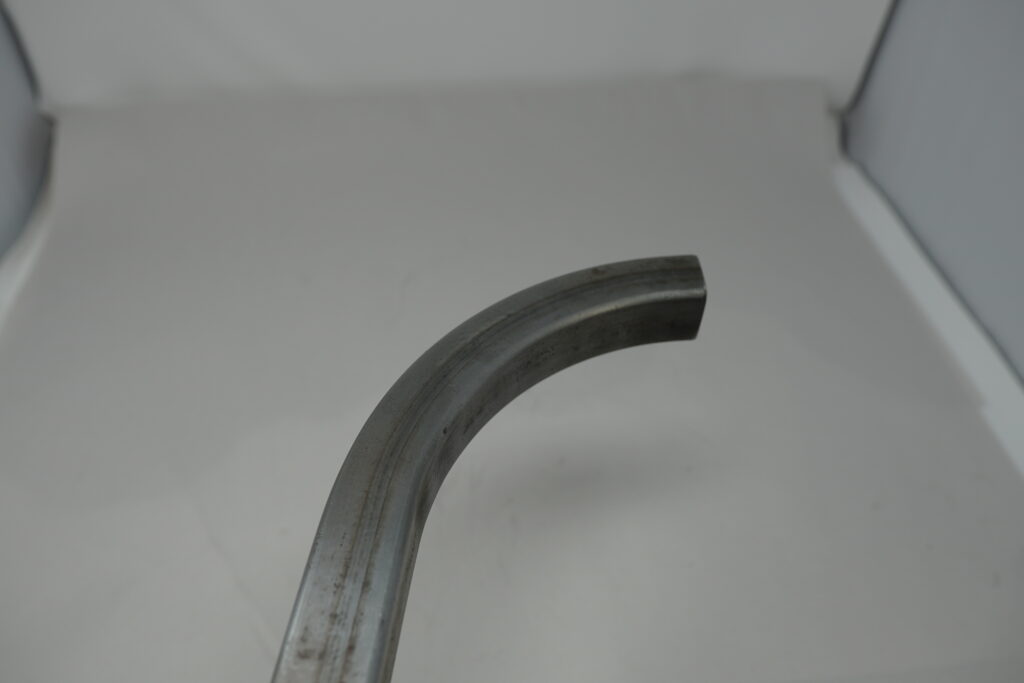
1″ x .083″ wall steel, 4.5″ CLR (4.5D): Slight ripple on the inside of the bend. This is the borderline zone — the bend is technically complete but the inner face shows visible distortion. Whether this is acceptable depends entirely on your application. Structural? Probably fine. Visible surface? Probably not.
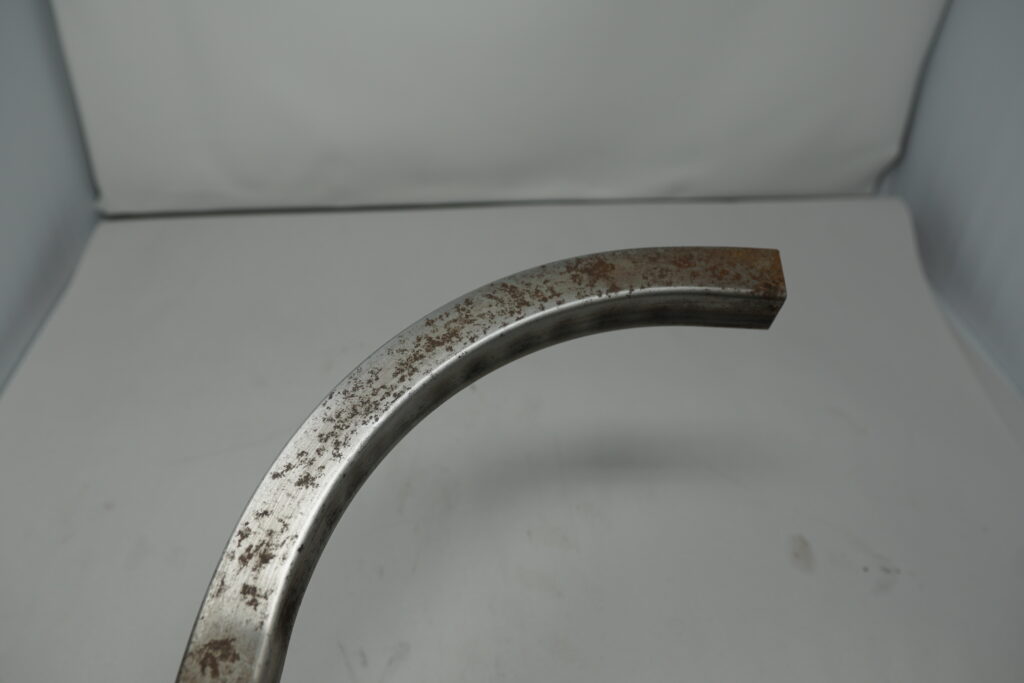
1″ x .050″ wall steel, 6″ CLR (6D): Heavy wrinkling. Even at a generous 6D, .050″ wall is not enough for 1″ square tube on standard dies. This is the hard limit.
Die Wear: The Number Nobody Else Publishes
Square tube dies wear faster than round tube dies. There’s no way around it. When you bend square tube, the flat faces of the tube drag against the walls of the die groove on every bend, creating friction that round tube simply doesn’t generate. If you use mohawk dies, the ridge wears in addition to the groove walls, accelerating the process further.
We know exactly what this costs because we’ve made roughly 10,000 bends in 1.5″ x .125″ A500 square tube building the carts our M6xx benders ship on. We replace the square dies about every 2,000 bends. At current tooling prices, that works out to approximately 16 cents per bend in die wear on that size and alloy combination.
That figure applies specifically to 1.5″ x .125″ A500 at shallow angles around 20 degrees. Deeper bend angles contact more die surface per bend, so wear accelerates with angle. Harder alloys wear dies faster than softer ones. Budget accordingly for your specific application.
For comparison, our round dies wear dramatically slower. One reason is geometry: our round dies have a true circular profile, so the tube contacts the die smoothly around the full arc of the bend. Some competitors use ellipsoid profile round dies, which create higher contact pressure at the start of the bend where every piece of tube loads in. That concentrated wear shows up after several hundred bends. We’ve seen it in person on competitor tooling. Our round die profile eliminates that failure mode entirely.
We Eat Our Own Cooking
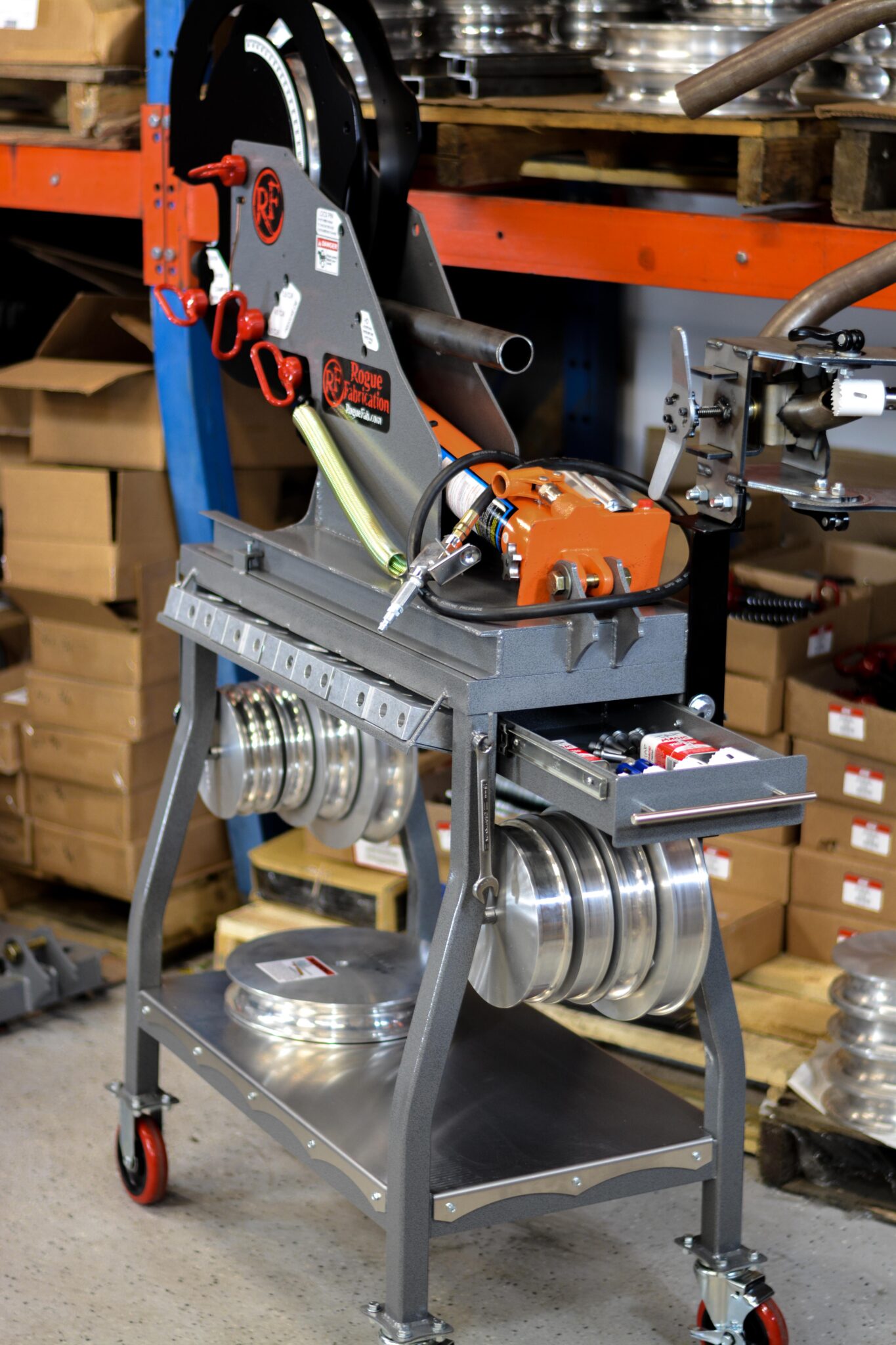
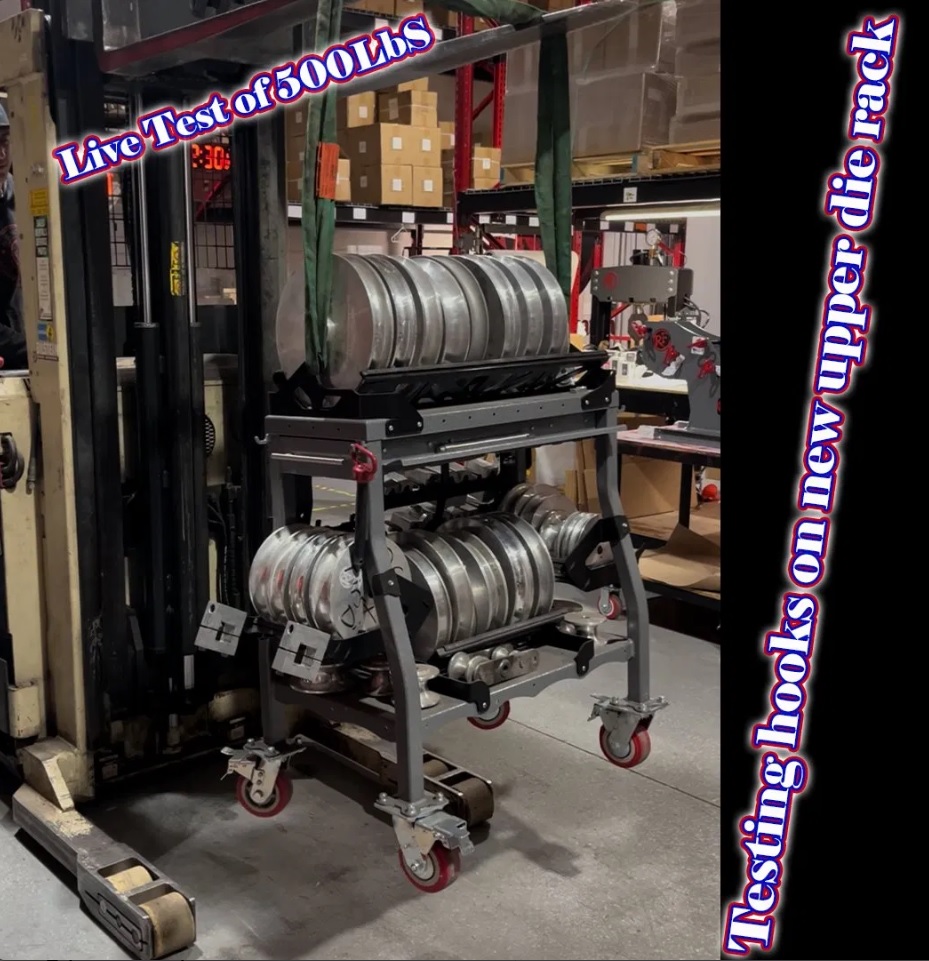
The carts our M6xx benders ship on are built from 1.5″ x .125″ A500 square tube, bent on the same machine and dies we sell. Every cart that leaves our shop is proof of what the machine can do with square tube at production volume.
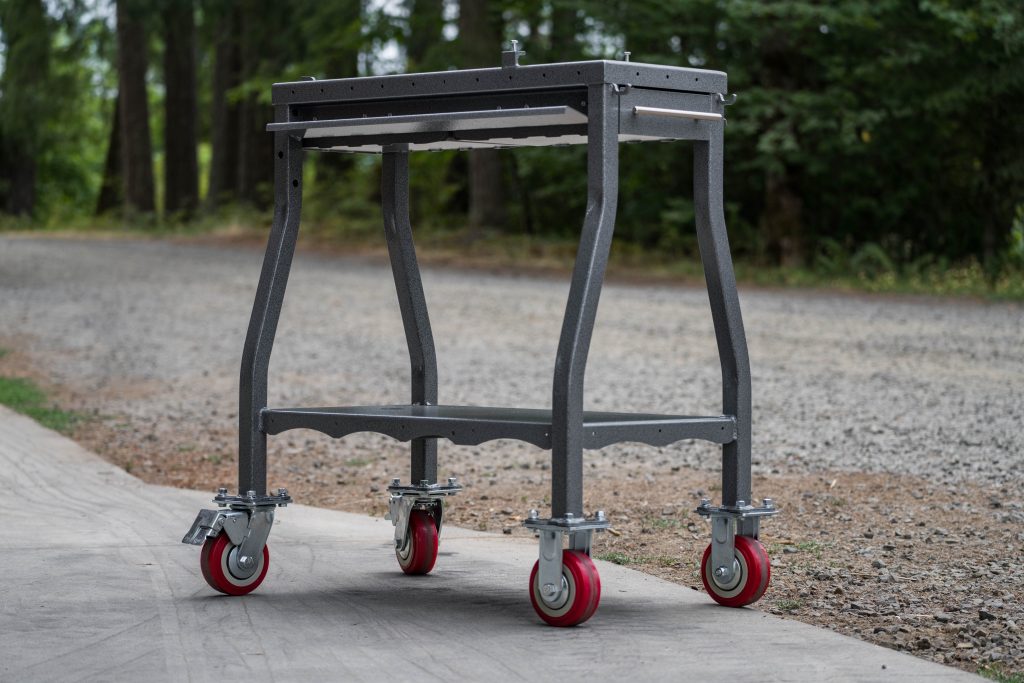
Those curved legs aren’t decorative. They’re the reason the cart is stable under load. We put 2,200 lbs on one during abuse testing, rolling it around the shop on the original casters. The rated useful load based on storage space is about 300 lbs of tooling. The structural capacity is considerably more than that.
What the M6xx Can Bend
Our square tube dies run from 1/4″ up to 1.5″ OD. We also offer hexagon dies for aluminum hex tube — that’s a separate article. Square tube mandrel bending is possible in theory, but the tooling is expensive, the tube release geometry after the bend creates real mechanical challenges, and we don’t currently offer it. For most square tube applications at D ratios of 4 and above with appropriate wall thickness, you don’t need a mandrel.
What Square Tube Bending Builds
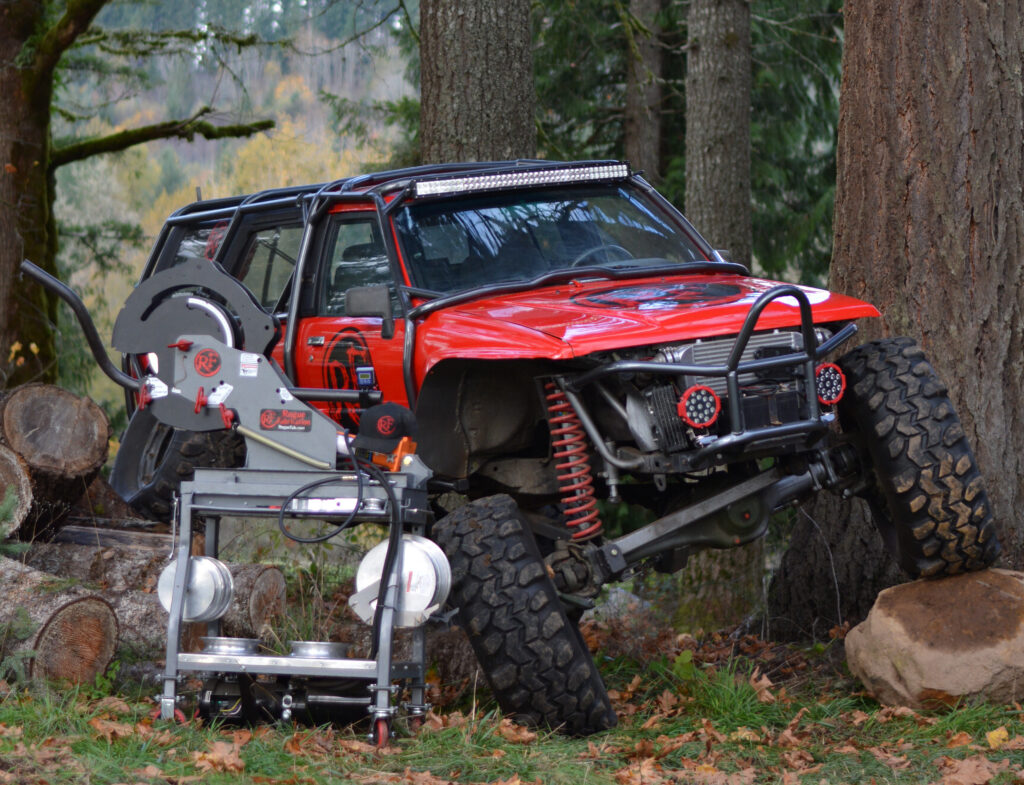
If you’ve bent square tube on an M6xx and have results to share, we want to hear about it. Comment below.