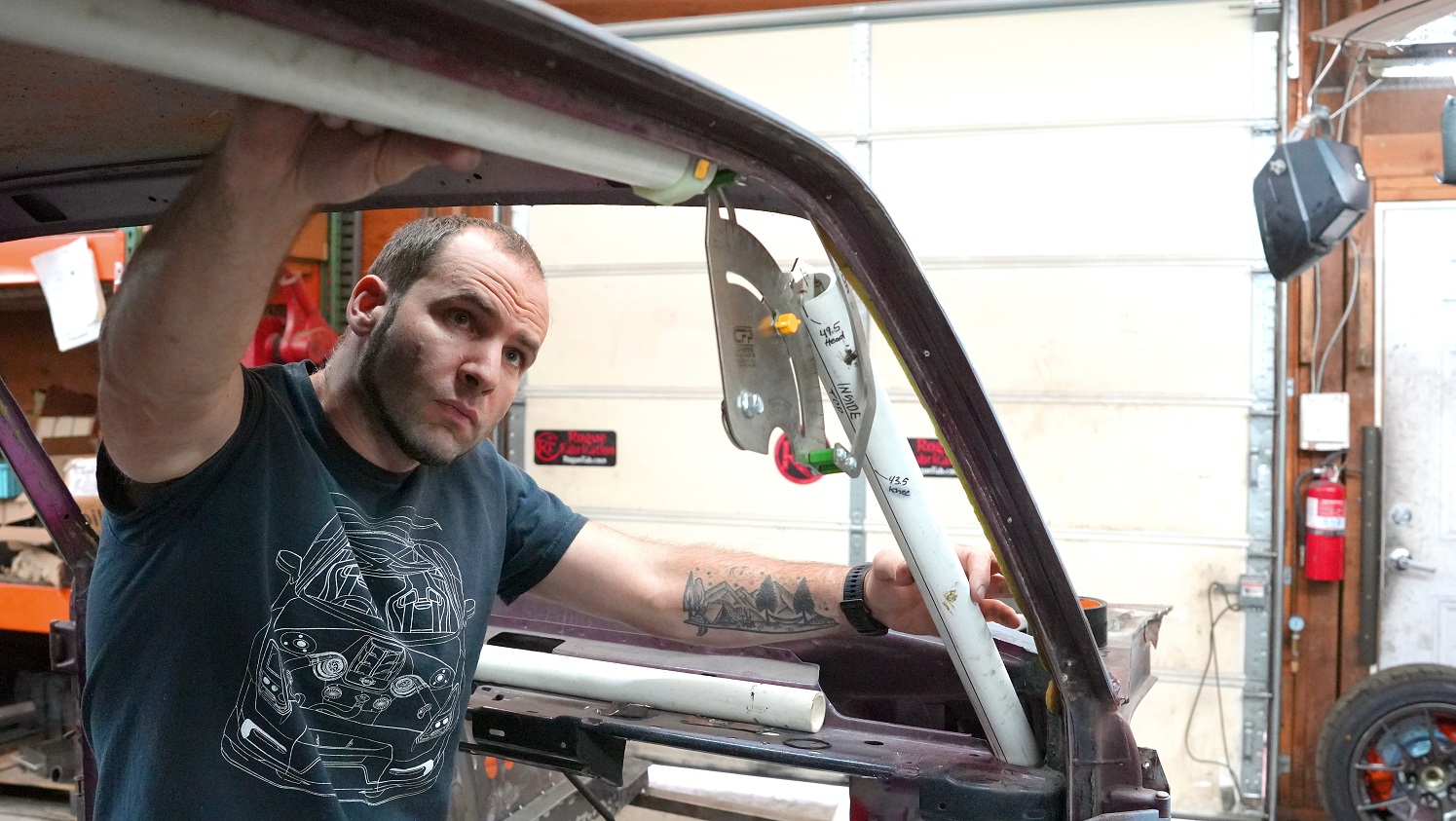
Get paid to do what you love. Be your own boss.
Starting a new business is exciting, but it can also be challenging and risky. With the right preparation, you can minimize that risk and get started on solid footing. This article is written for informational purposes and is not legal advice. See the disclaimer at the end.
Why a fabrication business?
Low barrier, high earning potential
There are many different small businesses, from home cleaning to engineering consulting. Fabrication fits right in the middle of those in terms of expertise and startup cost. One great thing about professional fabrication is that it does not require a formal degree or certification. Your existing experience and skills may already be enough to get started. Another major benefit is the rate you can earn per hour. Unlike many trades where customers expect a set rate, fabrication work often does not have a price ceiling your customer assumes going in. On top of that, your customer generally will not know how many hours you spent on their project. That lets you bid flat rates and complete the work at a pace that is rewarding for both of you.
What the numbers look like
With the right tools and enough experience, you can achieve very high effective pay rates. Running a $200K CNC milling machine, for example, can yield $300-500 per hour in revenue, but it takes years to learn and the machinery costs a small fortune. By contrast, you can generally plan to bill around $150 per hour for welding and $300-400 per hour for tube bending in a production run. Equipment costs for welding and bending are well under 10% of what a CNC mill would run. Fabrication and metalwork are in demand nearly everywhere, and the rates paid to skilled owners and fabricators reflect that.
To put a real example behind that: Joe Gambino wanted a tube bender to build off-road projects and did not like what was on the market. He built his first prototype bender in 2012, working out of his garage on his 1988 Toyota 4Runner. A few years later, that became Rogue Fabrication: 10-plus employees, annual sales in the millions, and more than 20 patents and trademarks filed for its products.
What should my business do?
If you are reading this article, you likely already have a passion for fabrication. The goal is to find the overlap between two things: what you are good at and what is in demand in your service area. What you are good at might come from your current job, or it might come from your hobbies, like restoring motorcycles or building crosskarts. Be ethical and abide by any non-compete clauses if you are ever considering going into competition with a past employer.
Your service area simply means the area you plan to serve. For hands-on work like welding, that is usually a driving radius of 50-100 miles from your shop. For any product you can ship, that expands to the whole country or beyond. Many businesses that start as job shops eventually find a niche and begin fabricating products in small batches to keep on hand as inventory. A job shop does work for customers one job at a time, even if some of those jobs are for bulk orders. Once you start building and stocking products to sell, that is a transition into light manufacturing, and it opens a different set of opportunities and challenges.
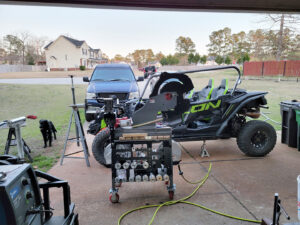
Jared Sams, M600HD in use at Buxton’s Fab & Dab in North Carolina. Buxton’s does a wide range of custom fabrication, specializing in side-by-sides and motorcycles.
Can I start this by myself? With a small team?
You can run a fabrication shop as a one-person operation. You can start in your garage, run a mobile service out of your truck or trailer, or rent shop space and build from there. A good mantra for a new business is “Keep it small, keep it all.” That is the opposite of “Go big or go home.” When you keep things small, you focus on what you do well. That minimizes risk and reduces the range of equipment you need to buy. That will limit the jobs you can bid on, but it also makes you more likely to land those jobs and keep them profitable. As your business and experience grow, you can expand your tools and services with good judgment behind those decisions.
Like most businesses, a fabrication shop scales when you have enough work to justify it. You add tools and workers, and you work out a sensible ratio between employee hourly pay and your billable rate. As an example, say you can hire a moderately experienced fabricator for $28 per hour in your area. If you are billing at $150-400 per hour, you are earning 5 to 14 times that person’s base wage. After accounting for shop overhead, consumables, and benefits, there is still substantial room for bottom-line profit to the owner.
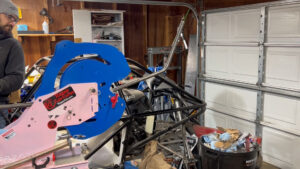
Casey Oswald, M605 in use at Protolite Racing in Lake Lillian, Minnesota. Protolite makes crosskart parts and sells complete plans so you can build your own.
What tools do I need?
The answer depends entirely on what your business will offer. No matter what tools you have, you will also rely on a network of outside suppliers for processes you cannot do in-house, like CNC machining, laser cutting, or nickel plating. Before adding any piece of equipment, think carefully about ROI. Most businesses frame ROI as the break-even point when the machine has paid for itself: divide the machine cost by the monthly profit or savings it generates. If a machine costs $76K and saves you $374 a month in labor, that is 203 months to break even, which is nearly 17 years. Do not buy it. If you cannot see positive ROI within 2-3 years, you either need more work to justify it or you have not found the right piece of equipment yet.
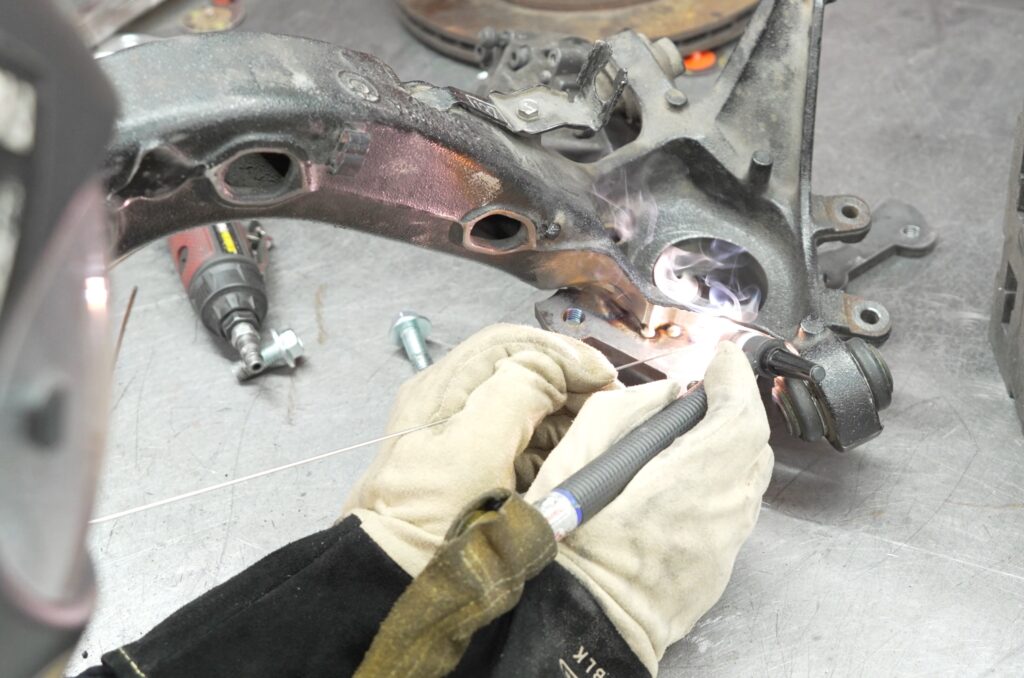
Brandon welding a control arm for the RogueFab shop project race car, a ~450HP twin turbo 1972 BMW 2002 running suspension from a 2000s-era BMW 3 series. The brackets are for forged monoblock Mercedes CL600 rear brake calipers, running a dedicated secondary hydraulic E-brake caliper for drift events.
Basic fabrication
Steel: You will need hand tools and small power tools like sanders and grinders, a way to cut metal to length such as a bandsaw, and a welder. A drill press is essential for most work. Affordable MIG welders are available for under $1,000 for business use, or you can step up to an industrial-grade Miller or Lincoln for around $1,800. A handheld plasma cutter or oxy-acetylene torch runs a few hundred dollars and handles profile and curve cuts.
Aluminum or stainless: This adds TIG welding in most cases, which roughly doubles the welder cost. Aluminum typically requires AC (alternating current) from the power source.
Moderate fabrication
This is where cold-working of metals comes in, meaning bending them past their yield point. The two most common customer requests are bends in sheet or plate and bends in tubing. For sheet and plate, a press brake handles tight-radius bending, which is by far the more common need. The RogueFab VersaPress, built in Sandy, Oregon, is an affordable 20-ton CNC shop press with press brake capability that eliminates typical press brake limitations like part height restrictions. For tubing, a tube bender handles tight-radius bends and a tube roller handles large sweeping curves. RogueFab has been building accurate tube benders in the USA for more than a decade. Adding a mandrel attachment brings internal support to the bend, which allows better quality, tighter radii, and thinner wall material. There is much more detail on tube bending and design considerations in the tech index.
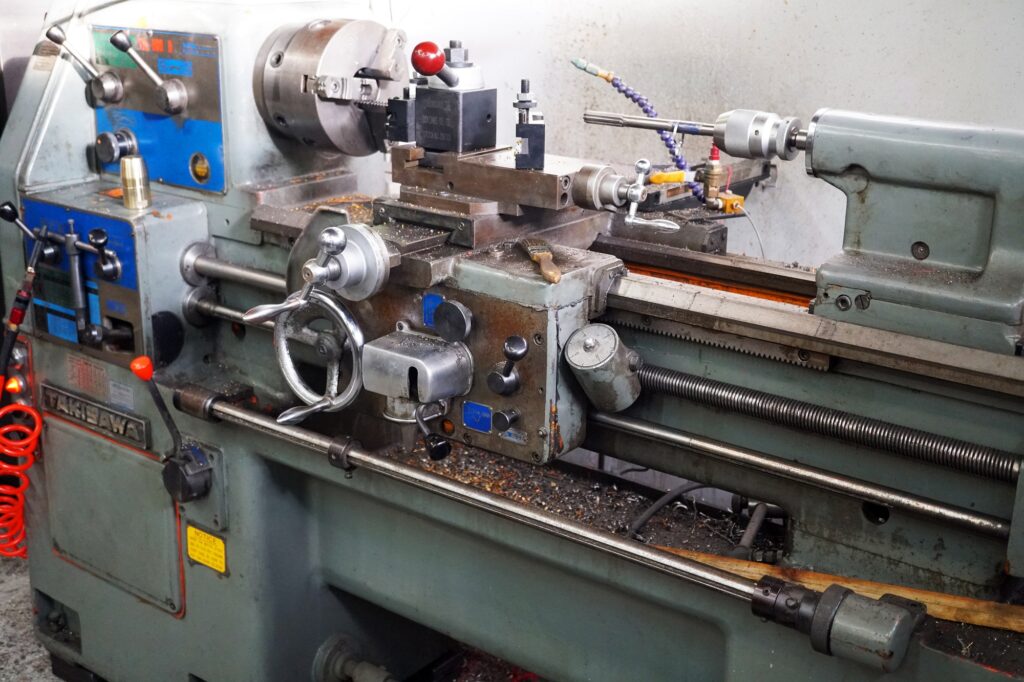
A high-quality precision tool room engine lathe in the RogueFab shop, photographed around 2018. This one was purchased used, which kept the cost manageable relative to its capability.
Advanced fabrication
Once you want to bring more processes in-house, like cutting or machining you previously sent out, you will start looking at more expensive machinery. That typically means a milling machine, a lathe, and eventually a CNC profile cutting table.
Mills: most people start with a knee mill like a Bridgeport, Sharp, or Acra. Used examples run $1-4K, while new machines are $15K and up. They handle machining of just about anything that is not round. A lathe makes round parts and is commonly made by South Bend, LeBlond, Monarch, and others, running $2-4K used or $10K and up new. Both can be run on a VFD (variable frequency drive) to generate 3-phase power from a single-phase panel for around $100. That makes manual machines even more practical for a small shop compared to large CNC equipment.
Small CNC mills and lathes exist (look at Tormach and Haas). They are more expensive for what they do, typically $10K used if functional and $20-60K new with options. For profile cutting, plasma tables dominate the small business market and stay under $20K new, though cut quality and maintenance requirements are real tradeoffs compared to laser and waterjet. Laser and waterjet machines produce significantly better cut quality with less maintenance, but they start around $80K and generally require three-phase power. These go naturally hand-in-hand with a press brake.
Other machinery
If you do high volumes of forming or hole cutting, an ironworker may fit your operation. Used examples are tough to find under $8K, tooling can easily cost more than the machine, and new units run $20K and up, with many requiring three-phase power. CNC tube notchers and tube plasma machines are impressive tools, typically running $75-100K, but ROI takes longer to achieve compared to other equipment investments. Factor your time savings carefully before committing.
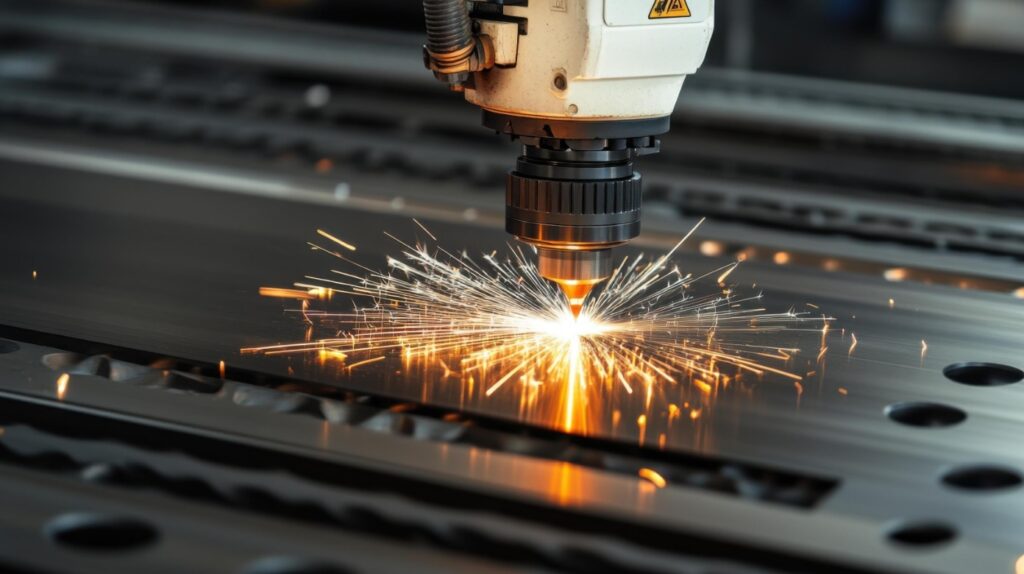
CNC plasma table cutting thin-gauge steel, close up.
Are there steps to follow to get started the right way?
There are some things you must do before you accept your first job, and plenty of things you should do but do not have to. It is fine if you do not yet know exactly what your business will offer. Once you work through this article, you will likely have a clearer picture. Here are the steps in order:
1. Pick a business name and register a web domain
Business name: Start thinking about this now, but do not let it block you from moving forward. If you cannot land on one, come back to it. Pick something that does not lock you into a narrow scope. For example, if you are skilled at TIG welding stainless from a pipe fitting career, “Donnie’s Stainless Steel Welding” seems logical. In practice, though, that name will cost you customers who need a race chassis, a side-by-side cage, or a custom gate. Something like “Precision Metal Work by Don” puts search-relevant terms first, applies to all metal work, and signals quality without promising you are the cheapest option. Replacing “metal” with “fabrication” would broaden it further.
Web domain: Four-letter domains are the most sought-after and rarely available. Aim for something in the 10-16 character range. You can register a domain at GoDaddy or any registrar for around $20 annually. Stick with .com. Extensions like .net or .org tend to confuse consumers. While you are there, add a domain email address for about $20 a year. Putting “[email protected]” on a business card reads very differently than “[email protected].”
2. Register your business with your state
Requirements vary by country and state, but most U.S. states follow a similar process. Search for your state’s Secretary of State office online (for example, “Michigan SOS”) and find the link to register a new business. Most small fabrication businesses will register as LLCs (Limited Liability Companies). An LLC can have one or more owners, offers flexibility on tax structure, and has low ongoing maintenance requirements. You can complete the forms online for around $100. Before you do, decide whether you want your personal cell number, personal email, and home address tied to your business permanently, because nearly everything you enter becomes public record. There are ways around all three, which we cover in later lessons. If you are outside the U.S., you will need to research your local business registration process.
3. Get a business bank account
Using your personal bank account for business looks unprofessional and creates real legal risk. A Limited Liability Company should keep its assets separate from personal assets. If business and personal funds are mixed, any mistakes the business makes may have to be resolved using that same blended pool of money, which can compromise your personal liability protection. Business checking should be free. Go to your bank of choice, use the business name from step one, and keep everything separate from day one.
Jason Duckett, M605 in use at Iron Duck Fabrication in Watkinsville, Georgia.
4. Brand your business
Logo: Unless you are skilled in digital art, hire someone. Good options include Upwork, Fiverr, or your local community college’s marketing department, where students often sell this work at bulletin boards. Nike paid around $50 for the swoosh. That is roughly the rate you will pay too. Keep it simple and clean. Complex, shaded logos do not scale well onto shirts, hats, or signage.
Business cards: There is no need to go into debt over business cards. Services like Vistaprint will run you $50-100. Keep them simple: business name, phone number, city and state, and a clear statement of your trade or services. A full address makes you appear more established, but that is your call.
Clothing: Pick either hats or shirts to start, not both. Buying 10-20 at a time runs about $20 per piece and is completely optional, but it does make a real difference when you are face to face with customers.
Vehicle branding: Skip the $5K wrap. If you work from your truck or trailer, a cut vinyl logo is practical and affordable. A local shop or someone on Etsy can do a one or two-color cut vinyl for $20-150 depending on size.
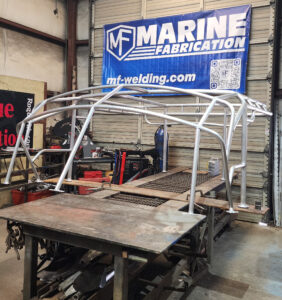
Evan Hodges, M625 in use at MF Marine Fabrication in Virginia Beach.
5. Register accounts and set up security
Accounts: If there is any chance you will use social media or video to market your business, register those accounts now. That typically means Facebook (as a business, not a person), Instagram, and YouTube. Note that YouTube email addresses registered through Gmail cannot be changed later since Google owns both. If you register with a non-Gmail domain, you can transfer it if needed. All of these are free to register.
Security and scams: People will try to steal from you faster than you make money. Use two-factor authentication (2FA) wherever it is available. Watch for phishing scams and fake login attempts. When a customer seems unusually eager and is willing to pay extra to rush an order, treat that as a red flag. Most thieves will not call you, and if you call them back, they usually will not answer. If someone “overpays” you and immediately needs a refund or wants you to pay their shipper directly, call your bank before doing anything. This is a well-documented scam pattern.
6. Set up how you collect money
Your approach will vary based on whether you are selling online, in person, or both.
E-commerce: Selling online can range from very simple to sophisticated. You can start on eBay (around 17% commission) or Etsy (around 15% commission), or invest some time in setting up your own storefront at roughly 2.9% in processing fees. Your domain registrar likely has a basic website builder built in, which is rough but gets your name online quickly. A simple page that says “call us to order” is enough to establish your presence while you build.
In-person sales: You need two things. First, a credit card processing system. Square is a well-known option and getting started requires only a free card reader for your phone. PayPal Here and others are competitive alternatives. Avoid anything with expensive hardware or a subscription fee. Second, a locking cash drawer. You can find a solid spring-loaded one for under $100 online. Keep enough change in the drawer to break a $100 bill twice on a small transaction, and secure it to something heavy.
7. Marketing and sales
Start with your existing network: friends, family, and professional contacts. From there, one of the most underrated early marketing moves is calling your competitors. Ask about their lead times. If the local cage shop is six months out and the gate shop has a same-day special, that tells you exactly where the demand is. Once you identify the right market, figure out where that group of people goes to find fabricators. For motorsports fabrication, that answer is often trade shows, local races, dune events, hill climbs, and similar gatherings. These typically offer vendor booth space for $50-500, and you are selling directly to the end users. You can show up with folding tables and a pop-up shade for around $250 and look unprepared, or spend around $1,500 and look like a professional traveling marketing operation. We will cover show marketing in more detail in later lessons.
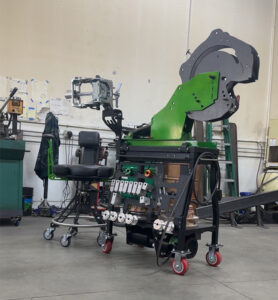
Fowler Gregerson, M625 in use at Bump It Off-Road in Windsor, Colorado.
8. Long-term considerations: income and sales taxes
Tax firms can handle every part of this section for you. Read on if you want to manage it yourself.
Income tax: You can file taxes for an LLC as a pass-through entity on your personal federal and state returns. Here is a simple example: say you make $50K at your W2 job, your LLC brings in $20K in revenue, and you spend $5K on materials and other deductions. Your tax preparer or software will fill out Form 1040 Schedule C for the business income. Revenue of $20K minus $5K in expenses equals $15K in taxable income from the LLC. Added to your W2 income, your total is $75K. You will owe taxes on that combined income, with withholding from your W2 likely covering a portion.
To avoid penalties, calculate your federal tax rate at the IRS tax brackets page and set aside that percentage of your LLC profit each quarter. Then make estimated payments using the process described at the IRS estimated tax page. Your state will have a similar process if it has an income tax. Skipping estimated payments will cost you some fees, but it is generally less painful than filing late.
Sales tax
In your state: Most states require you to collect sales tax from customers from day one of doing business there. The same applies if you personally travel to another state to deliver or sell goods. Look up requirements on your state’s Department of Revenue or Secretary of State website. Many states offer tax exemptions for businesses purchasing inventory they will resell or buying production tools. Apply for those exemptions before the purchase for the transaction to qualify. Keep any tax exemption certificates your customers provide on file, since tax fraud is common and this protects you.
Out-of-state sales tax
Every state that collects sales tax defines “nexus” differently. Nexus is the point at which a business shipping into that state must collect and remit their sales tax. Nexus thresholds are commonly set at 100 or more transactions per year, or $100K or more in annual sales to that state. Requirements vary, and a current list by state is available at the Tax Foundation nexus reference page. If you are doing your best and register a month after crossing a threshold, most states will not impose significant fines. As your business grows, your e-commerce platform will likely handle sales tax calculation, collection, filing, and payment automatically.
Zero sales tax situations
If you are not yet required to collect sales tax for a customer’s state, the right answer is straightforward. Tell them: “We are not obligated to collect sales tax for your state at this time, so we will not charge you.” Add that you cannot advise them on their tax obligations in their own state. What they do with that information is their responsibility, not yours.
Cost of mistakes
If you establish nexus in a state and do not pay taxes there, they will eventually find out and conduct an audit. Participating in the audit gets you a bill for the actual amount. Not participating gets you a bill based on broad assumptions, which is usually higher. If you never collected the tax from customers, that does not eliminate your obligation to pay it. Fortunately, most states set nexus thresholds high enough that you have time to plan. California’s threshold, for example, is $500K in annual sales to that state at the time of this writing.
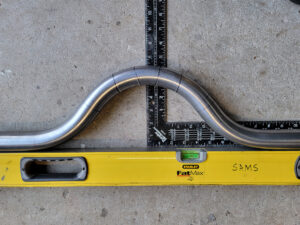
Jared Sams, M600HD in use at Buxton’s Fab & Dab in North Carolina.
Tips and tricks
1. Reputation
Build it from day one
Your business reputation is your single most valuable sales tool. Start by creating a Google Business listing so customers can find you and leave reviews. Then follow these principles:
How to handle customers
A. The customer is always right. This is an oldie, but it is nearly perfect. Unless your customer is going to put you out of business with an unreasonable demand, just give them the bolt and nut they lost or stripped. It is not worth the fight or the negative review.
B. Be honest. You will get caught if you lie. If a delivery is running late because of something on your end, tell the customer it is late. You do not need to share personal details. They do not need to feel sorry for you to understand that the schedule slipped.
C. Listen. Write down their name. Use it. Thank them for reaching out and learn what they do, whether that is building race cars, fence work, or something else. Cater your pitch to their specific situation.
When things go wrong
D. Lose money when you deserve it. If you under-bid a job, you can ask for more money at some point before it gets out of hand. If you screw up and have to fix it on your dime, you likely cannot. Warranty issues, shipping damage, and similar problems can easily cost you more than you made on the sale. The business owners who handle this poorly, blame others, or leave customers without what they paid for take a short-term gain and a massive long-term loss in reputation. Make it right, then ask what else you can do. Learn from it and do not repeat it.
E. Reviews and SEO. Ask customers for reviews and photos of their finished work. Post those reviews as you build out your web presence. At some point you will need to learn or pay for SEO if you plan to use the web for leads or e-commerce. It is one of the highest-leverage investments a small fabrication business can make.
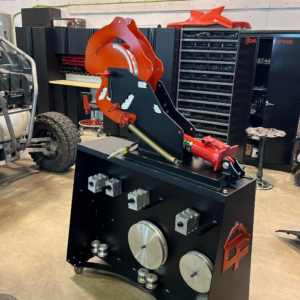
Michael Childers, M625 in use at Chilli Welding and Fabrication in Middleton, Ohio.
2. Debt, cashflow, and growth
Debt: It takes money to make money, but you do not need massive debt to start a metalworking or manufacturing business. The less debt you carry, the lower your minimum monthly profit needs to be. Focus first on the tools that will produce the most income or savings relative to their cost, and that you can get jobs into your shop to justify. Consumer debt carries interest around 20%. Business credit varies widely depending on the situation.
Service and job shop businesses
Consider a service-heavy business that doubles in sales. Revenue doubles, labor costs increase accordingly, and you have not made a major capital investment to absorb the extra income. The result is roughly double the net income. You may spend more on consumables and supplies, but you will generally be cash-rich compared to the prior year.
Manufacturing businesses
This plays out very differently. Say you generate $50K in sales in year one with $25K in inventory, selling products for double what you paid for them. The following year your sales double to $100K. During that period, you spend $50K replacing inventory sold and another $25K building your stock up to match your new sales level, for $75K in total inventory purchases. You brought in $100K in sales and spent $75K on inventory, which sounds bad, but you did not sell all of it. Half is still on the shelf to sell later.
The cash flow problem is that inventory cost is only deducted from taxable income when sold, not when purchased. So your taxable income is $100K minus $50K cost of goods sold, and at a 30% tax rate you owe $15K. Your net for the year: $100K in sales, minus $75K in purchases, minus $15K in taxes, equals $10K. You likely have less cash in the bank than the prior year, despite the business growing. A business that doubles every year is not a cash cow. It is a cash hole. Very few businesses grow that fast, but this example illustrates why a healthy manufacturing business can struggle to produce strong cash flow until growth slows and stabilizes.
3. Have fun
Make it yours
Being your own boss is genuinely freeing. You choose what your business does. If you love metal art, that is what you make and sell. If you love building custom bicycle frames, you get the idea. Take real pride in the work and in delivering value to your customers, and the business becomes easier to run as a result.
What our customers have built
We have seen customers buy a tube bender and notcher from us and build profitable roll cage businesses around just those two tools. They work on projects they love, set their own schedule, and earn excellent pay. Others have gone deep into marine fabrication, which typically involves anodized aluminum and stainless steel and commands some of the highest billable rates in tube fabrication. General construction handrail work is consistently in demand and pays well.
Motorsports fabrication
The largest area of tube fabrication activity we see is motorsports. That covers drag race cages and chassis (SFI, NHRA, and others), road race cages (NASA, SCCA, FIA, Lucky Dog, 24 Hours of Lemons, and others), rally car cages, side-by-sides, desert trucks, and crosskarts. Crosskarts in particular are a fast-expanding market of primarily home-built rear-wheel-drive carts. You can build one for under $5K in parts from plans, or spend up to $50K on a complete turn-key machine that will outrun any stock side-by-side in nearly any competition. Sanctioned crosskart racing is expanding around the world as interest in affordable, accessible motorsport grows.
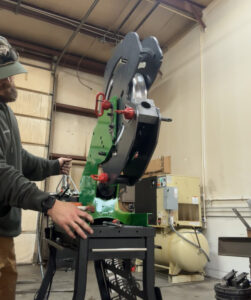
Fowler Gregerson, M625 in use at Bump It Off-Road in Windsor, Colorado.
Disclaimer: This is not legal advice. This article is based solely on our own experience and is provided for informational purposes. We strongly recommend consulting certified professionals before making decisions on any of these topics. Our terms, conditions, and agreements linked throughout this website apply to this article. We are not responsible for the content at any external links. Where this article and our site terms conflict, the site terms take precedence.